
A Short History of Kansas City Jazz
Kansas City jazz can't be summed up in a sentence, but you can hear it in a few bars: a big band riffing behind a soloist, a rhythm section walking steady, and nobody in any hurry for the tune to end. It is blues-based and built for dancing, and in the 1920s and '30s — when much of the country's nightlife was shutting down — Kansas City's was just getting going. For about a decade, this was the most exciting place in America to hear a jazz band. Here is how it happened — and why it never entirely stopped.
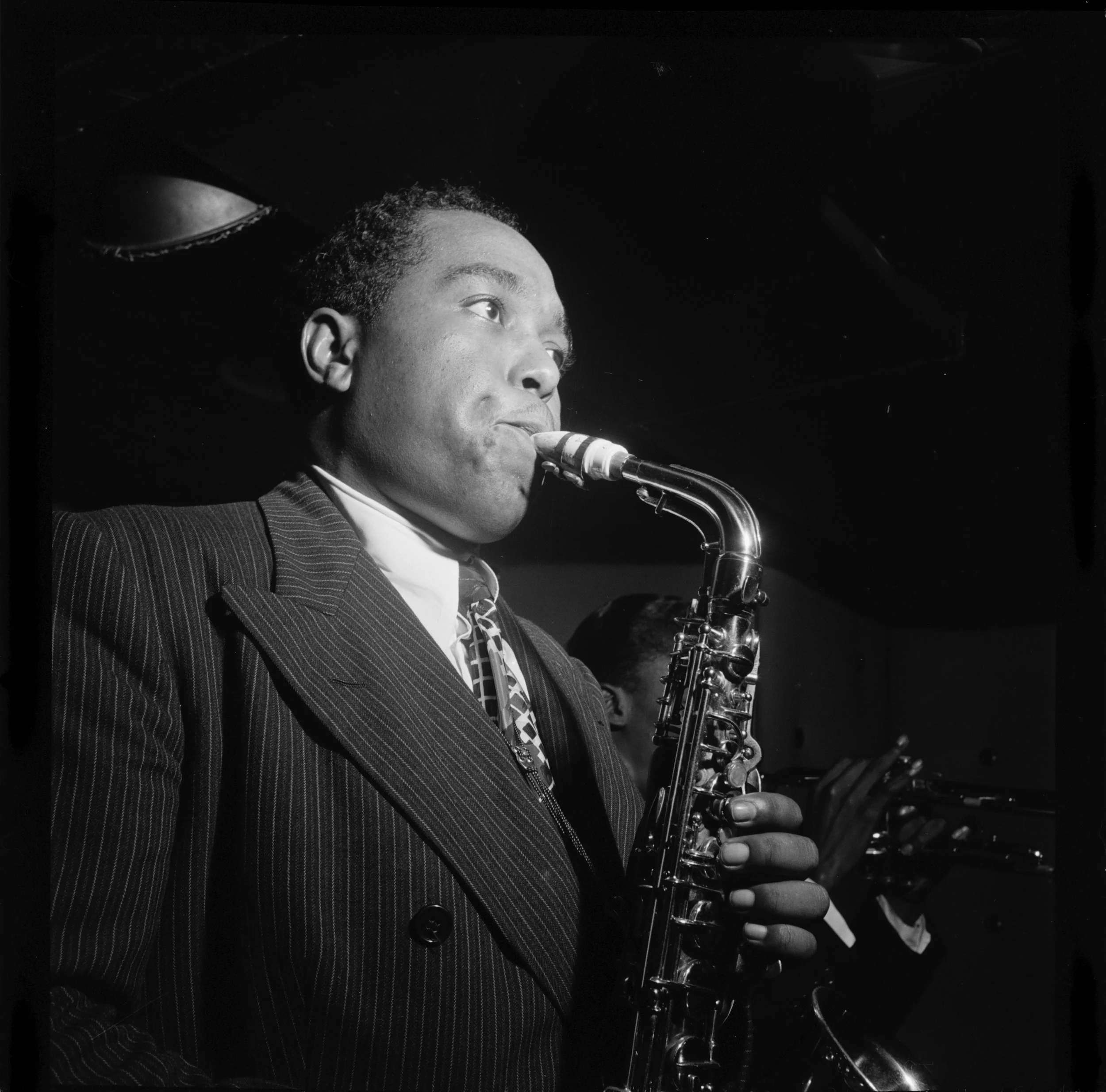
Photo: William P. Gottlieb, Library of Congress
Territory bands and Bennie Moten
In the 1920s, Kansas City was a railroad crossroads, and that made it headquarters country for the territory bands — the Black orchestras that toured the ballrooms and theaters of the Midwest and Southwest. The finest of them was Bennie Moten's Kansas City orchestra. Moten, a pianist and a shrewd bandleader, built the region's defining sound: driving, riff-based arrangements with room for solos to stretch, rooted in blues and ragtime. The players who passed through his band included bassist Walter Page and a pianist from New Jersey named William "Count" Basie, who had settled in Kansas City after years on the road. When Moten died suddenly in 1935, Basie gathered the band's core players and started an orchestra of his own.
Wide open: the Pendergast years
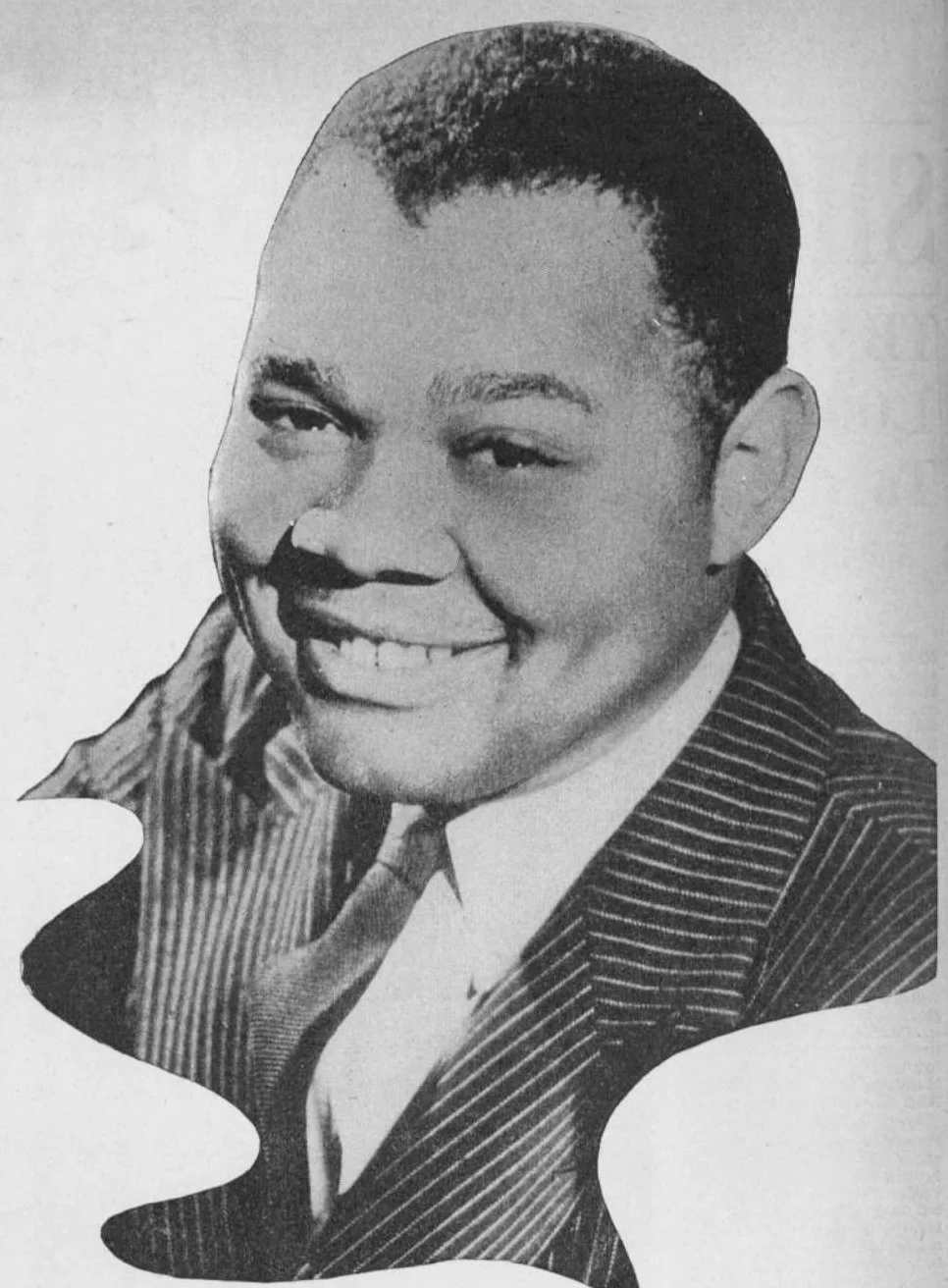
Bands alone don't make a scene; work does, and Kansas City had work. In the late 1920s and '30s the city was run by Tom Pendergast's political machine, and under Pendergast it was wide open. Prohibition was national law and was largely ignored here — liquor flowed, gambling ran, and the nightclubs stayed open all night. For a musician, that meant steady pay, night after night, and players from all over the country made their way here to get it. The same rooms nurtured pianist Pete Johnson and blues shouter Big Joe Turner, one of the era's great partnerships. And because so many good players were in town after the gigs, the jam session became the city's real conservatory — the place where the Kansas City style was sharpened, chorus after chorus, until sunrise.
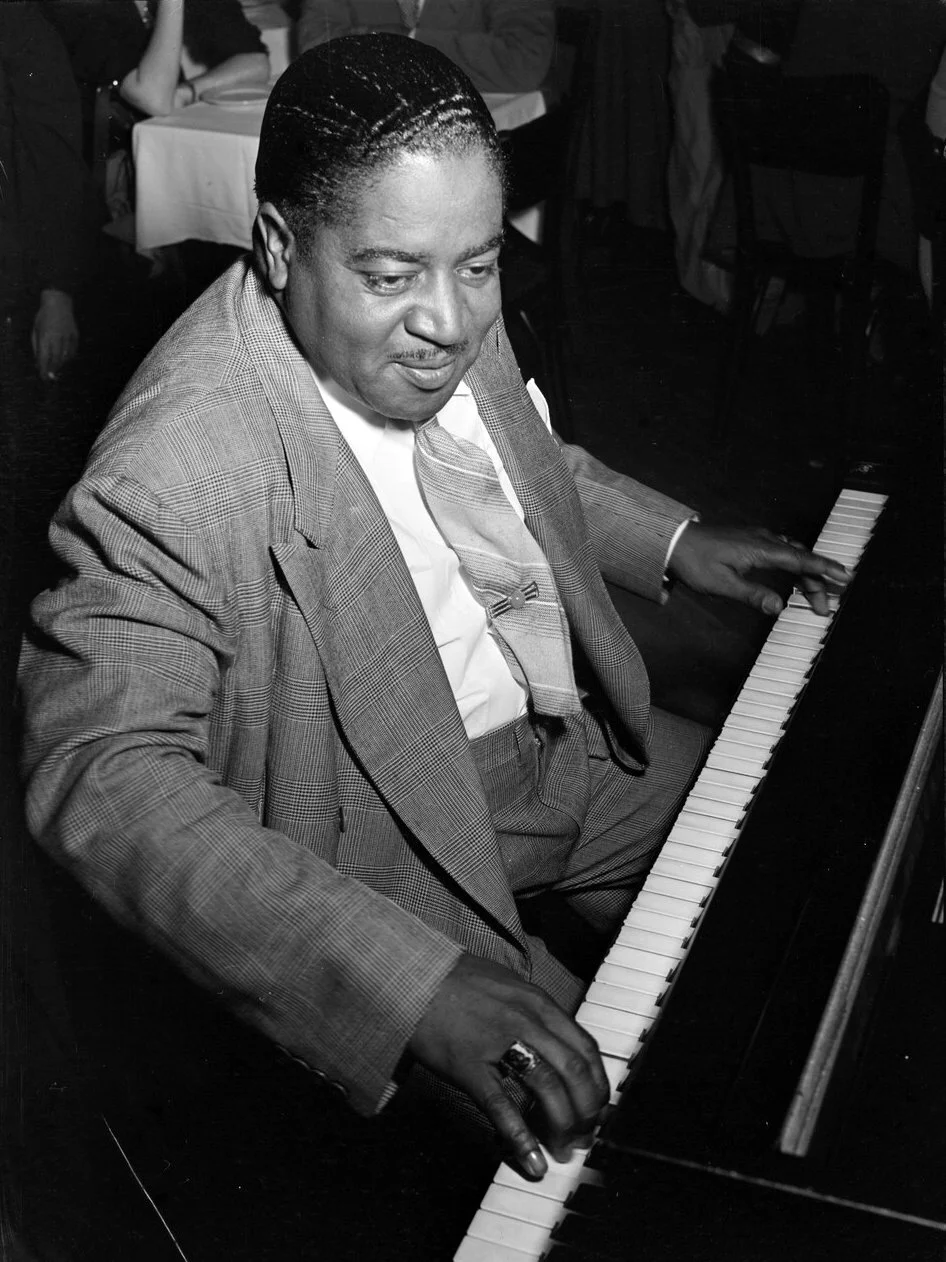
Photo: William P. Gottlieb, Library of Congress
Basie at the Reno Club, and the road to New York
Basie's new band, the Barons of Rhythm, took up residence at the Reno Club on 12th Street and became the tightest small band in town: Walter Page's walking bass, Jo Jones moving the beat to the hi-hat, Jimmy Rushing shouting the blues, and Lester Young, whose light, floating tenor saxophone was already pointing somewhere new. Broadcasts from the Reno Club carried the band beyond Kansas City. New York producer John Hammond heard one and came to hear for himself, and by the end of 1936 Basie had taken the band east. In New York the Barons of Rhythm became the Count Basie Orchestra, and records like "One O'Clock Jump" made the Kansas City sound — riffs, blues, and a rhythm section that swung — the sound of swing itself.
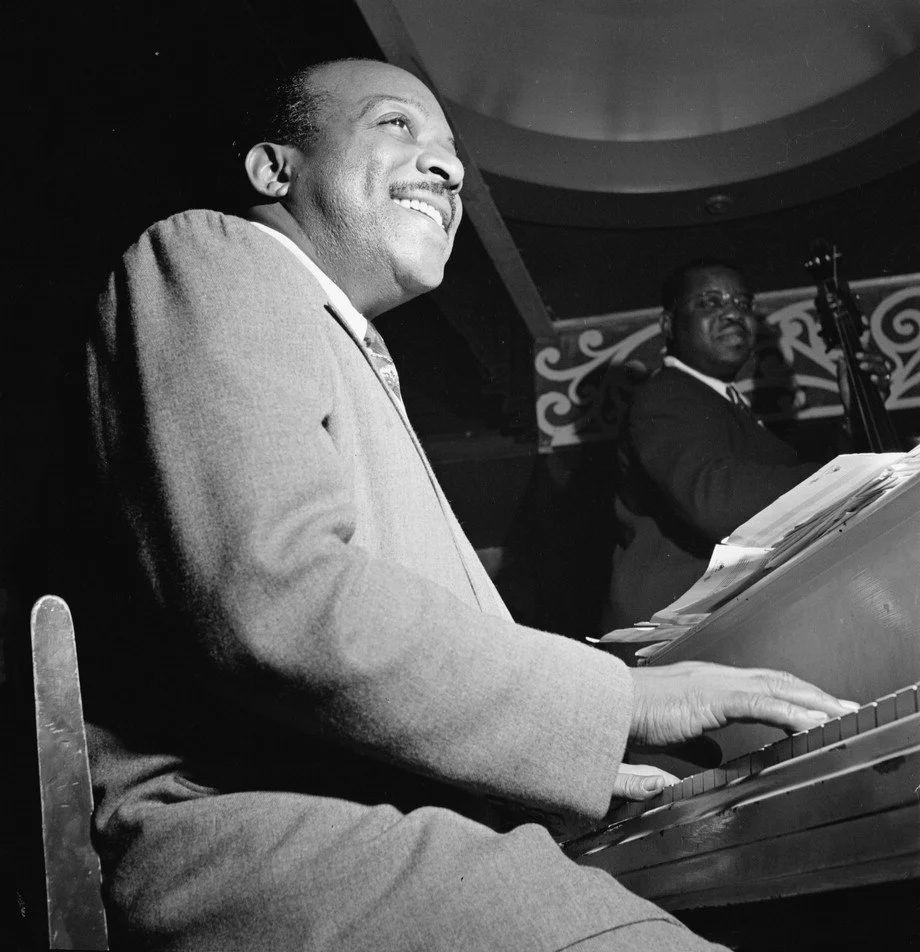
Photo: William P. Gottlieb, Library of Congress
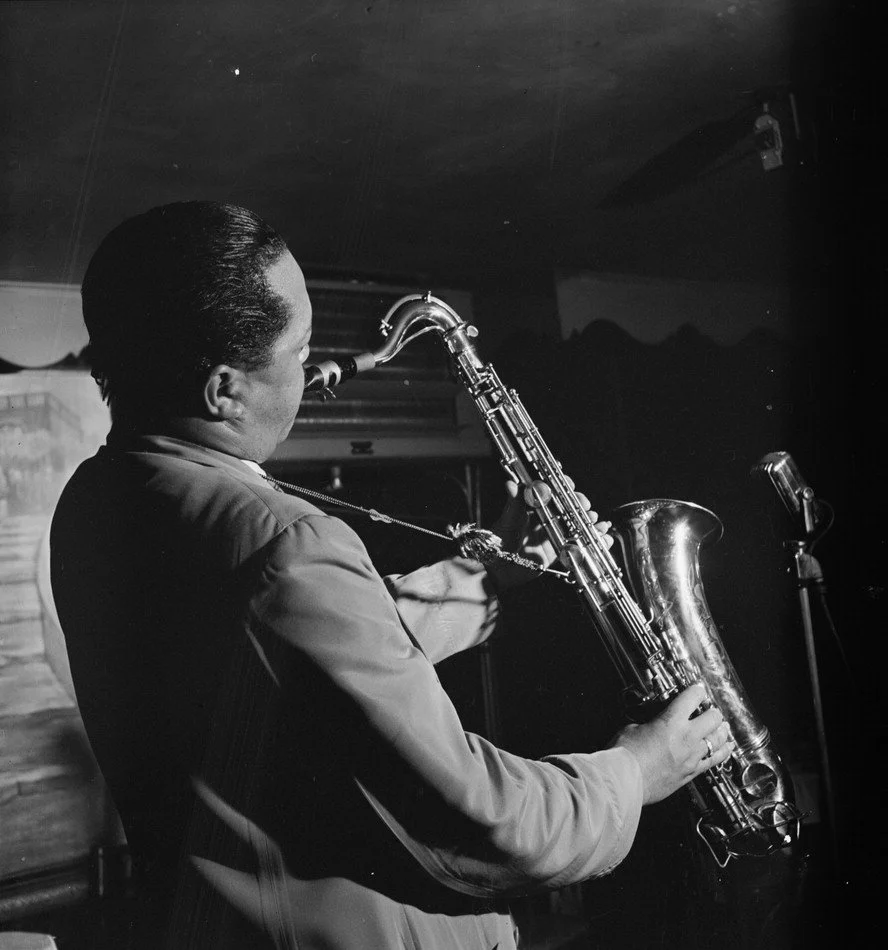
Photo: William P. Gottlieb, Library of Congress
The laboratory: Local 627 and the Mutual Musicians Foundation
The clubs were where the music earned its living; the union hall was where it did its experimenting. In segregated Kansas City, Black musicians belonged to Local 627 of the musicians' union, and its hall — the building now known as the Mutual Musicians Foundation, at 1823 Highland Avenue, in the heart of 18th & Vine — served as rehearsal space, hiring hall, and after-hours club. When the paying work ended, the sessions there began, and they ran until dawn. Elders tested youngsters, new ideas got tried out loud, and a player who couldn't hold his own found out quickly. Nearly everyone in this history passed through that room. The tradition never entirely stopped: the Foundation still hosts late-night sessions on weekends, listed in our complete venues directory, in the same hall where it has gone on for the better part of a century.
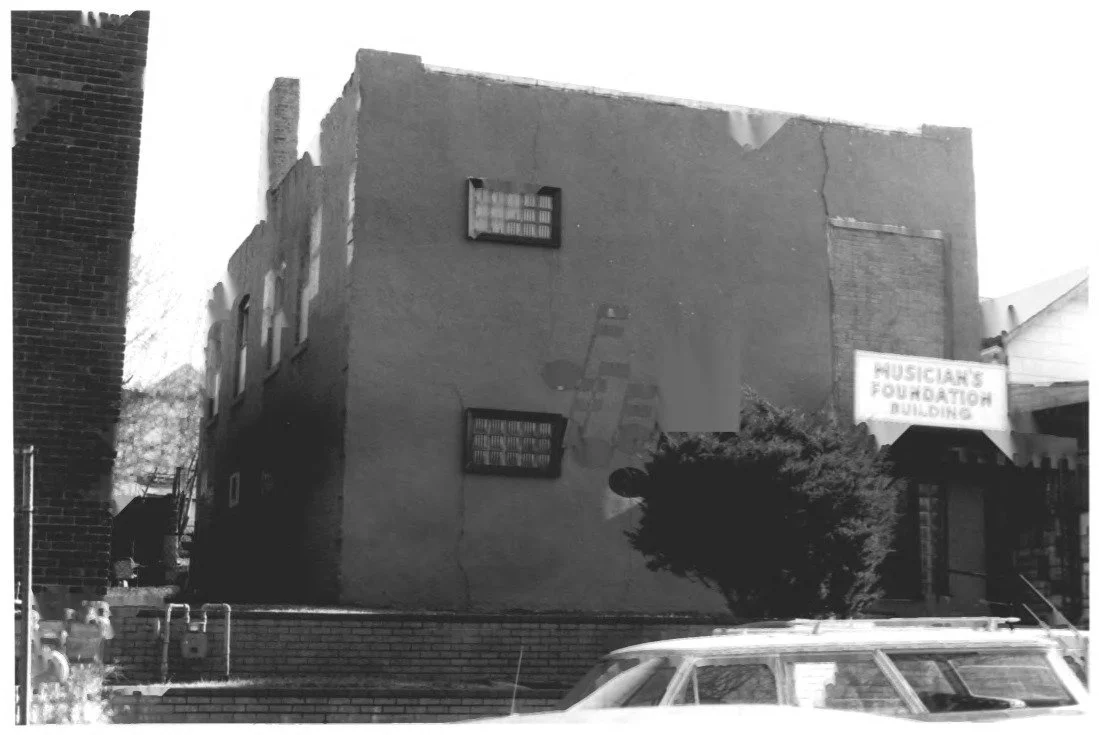
National Register nomination photo, 1977
Charlie Parker, Jay McShann, and the seed of bebop
The most famous student of those sessions was Charlie Parker. Born in 1920 in Kansas City, Kansas, and raised in Kansas City, Missouri, Parker was a teenager haunting the clubs and the Foundation — and by the story everyone in Kansas City tells, an early humiliation at a jam session, a cymbal tossed at his feet mid-solo, sent him home to practice with a vengeance. He got his schooling in Jay McShann's band, the last of the great Kansas City territory orchestras, and McShann's early-1940s records preserve Parker's first recorded solos. When Parker moved to New York, the ideas he had worked out in Kansas City jam sessions — daring harmonies, restless rhythms, solos that thought at double speed — became, with Dizzy Gillespie and others, bebop: the foundation of modern jazz. McShann stayed. He lived in Kansas City for the rest of his long life, playing blues-drenched piano — the tradition and its future, rooted in the same few blocks.
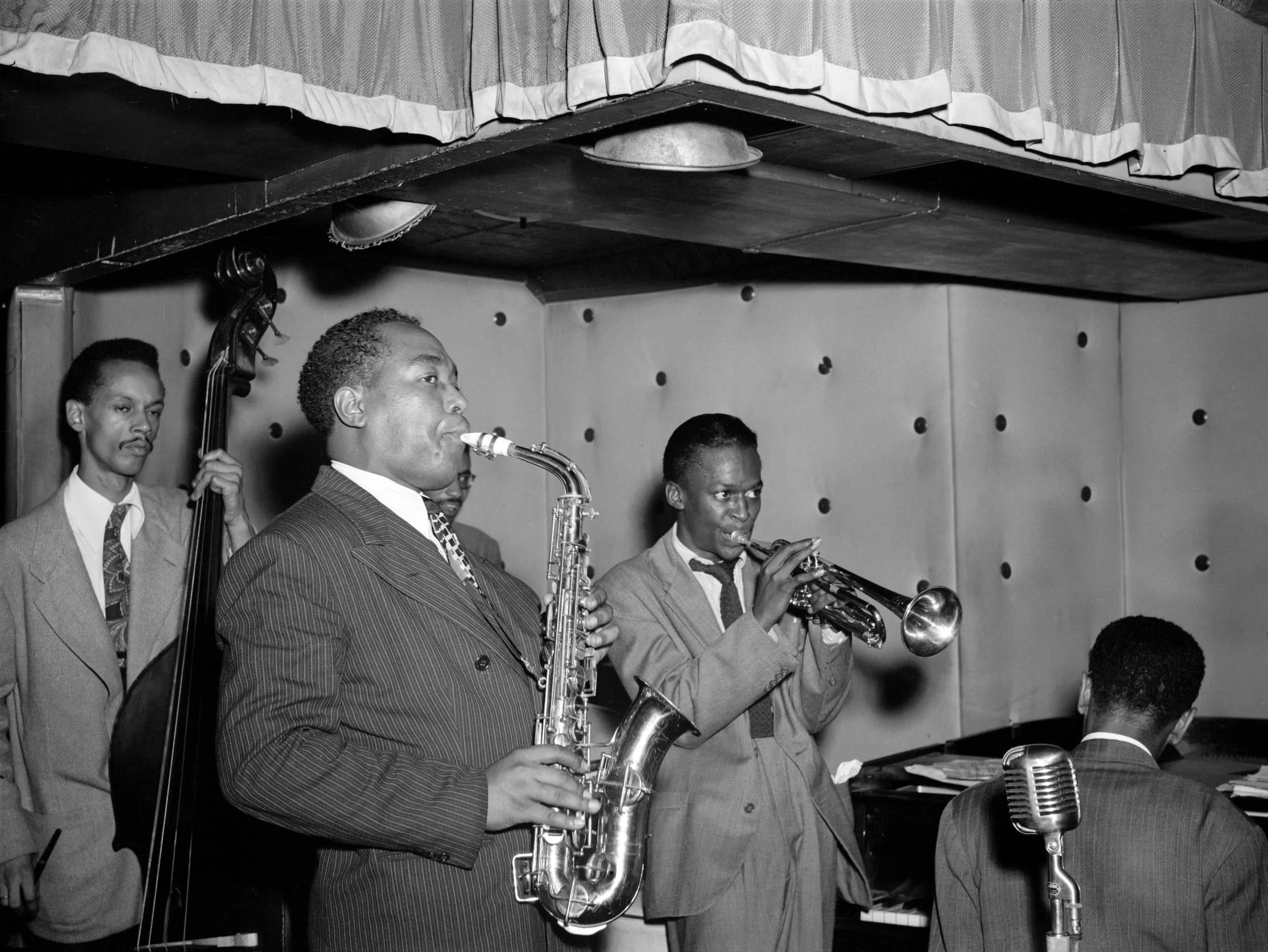
Photo: William P. Gottlieb, Library of Congress
The music disperses
The wide-open era ended the way it had to. Pendergast was convicted of tax evasion in 1939, the reformers who followed shut down the clubs, and the musicians scattered — most of them, like Basie and Parker before them, to New York. Kansas City's decade as the crossroads was over. But the music didn't die; it dispersed. The Kansas City style became the mainstream of swing and the seedbed of bebop, which is to say it became modern jazz itself. At home, the scene grew quieter and more local — working musicians in neighborhood rooms, the Foundation's sessions carrying on — until late in the century, when the city began honoring what it had made: the American Jazz Museum opened at 18th & Vine in 1997, and the Gem Theater across the street was restored. Our guide to the 18th & Vine district covers the neighborhood as it stands today.
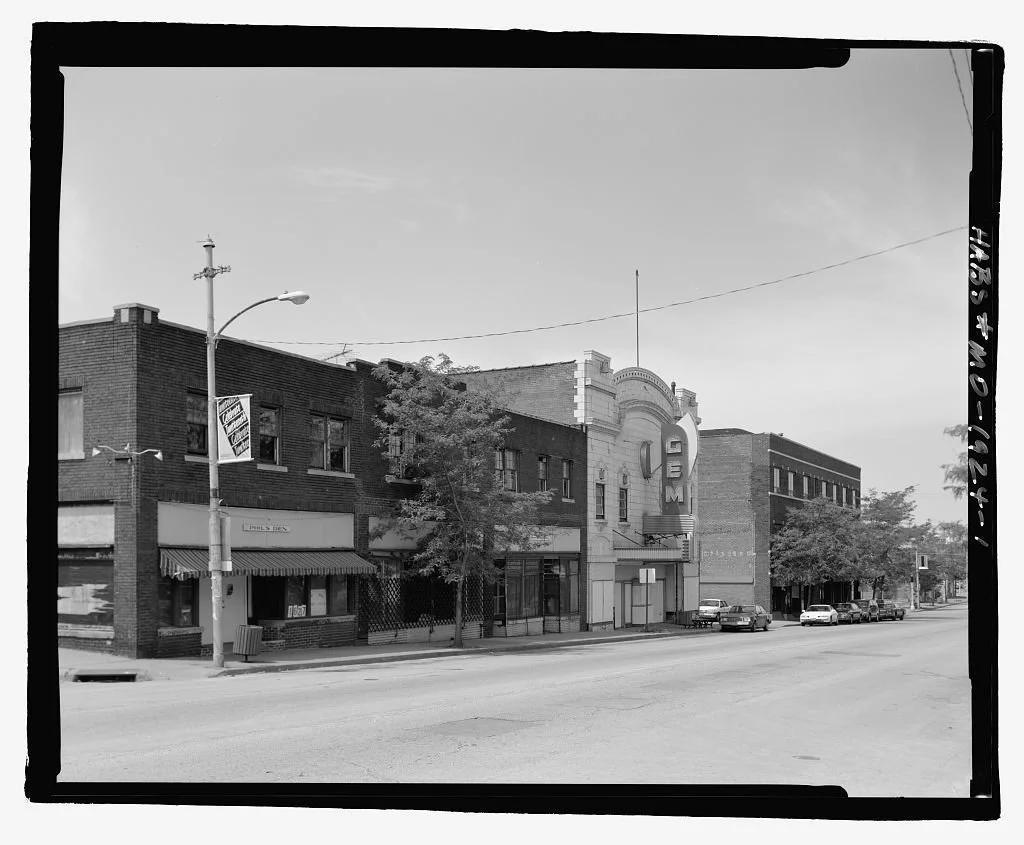
Historic American Buildings Survey
The living legacy
Today, the history on this page is not a plaque — it's a calendar listing. On any given night, live jazz is playing somewhere in the metro: club dates, big bands, and jam sessions where young players still learn the Kansas City way, standing next to better players. See the calendar for what's on and the venues directory for the rooms. The passing-down is deliberate, too — Kansas City takes jazz education seriously, from school programs to student ensembles keeping the repertoire alive. And you can see the scene as well as hear it, in photographer Dave Thurman's Kansas City jazz photo collection, shot in the clubs and sessions around town.
A hundred years after Moten, Kansas City jazz is not a museum exhibit. It's a Tuesday night somewhere across town. Go hear it.
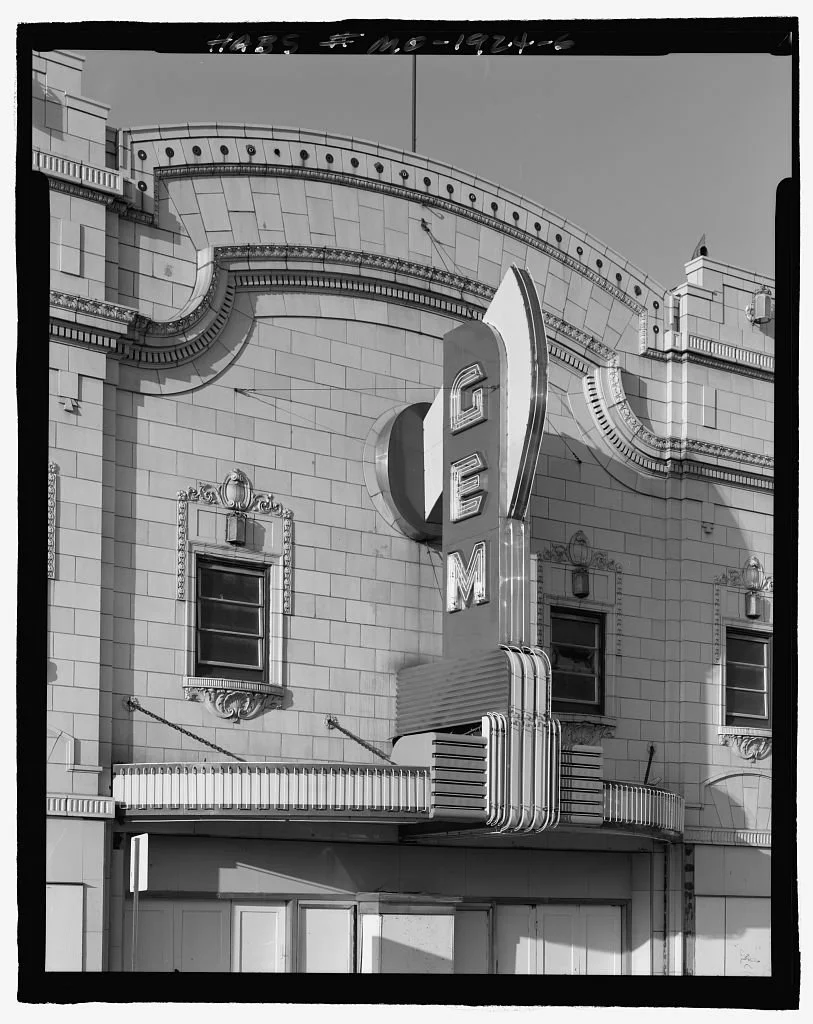
Historic American Buildings Survey